
Open AA3 Files Instantly – FileViewPro
페이지 정보

본문
An .AA3 file functions as an audio track encoded using Sony’s proprietary ATRAC3 (Adaptive Transform Acoustic Coding) format, a lossy codec introduced in the late 1990s as part of Sony’s MiniDisc and Network Walkman ecosystem. ATRAC3 and the AA3 extension grew out of Sony’s broader ATRAC family, first launched in 1992, which was designed to optimize storage and battery life on portable players by cutting file size with psychoacoustic compression. In practice, AA3 became a house format for Sony’s ecosystem: music was imported and converted in SonicStage or similar tools, then transferred to supported Walkman, VAIO, or MiniDisc hardware for on-the-go listening. As Sony gradually retired ATRAC in favor of open formats like MP3 and AAC, first-class support for AA3 shrank, and today many common players either fail to open these files or require awkward workarounds. FileViewPro helps breathe new life into these legacy libraries by letting you open AA3 files directly, listen to their contents, and inspect technical details such as codec, bitrate, and sampling rate, even on machines that know nothing about Sony’s old ecosystem.
Audio files quietly power most of the sound in our digital lives. Every song you stream, podcast you binge, voice note you send, or system alert you hear is stored somewhere as an audio file. In simple terms, an audio file is a structured digital container for captured sound. That sound starts life as an analog waveform, then is captured by a microphone and converted into numbers through a process called sampling. Your computer or device measures the sound wave many times per second, storing each measurement as digital values described by sample rate and bit depth. Combined, these measurements form the raw audio data that you hear back through speakers or headphones. The job of an audio file is to arrange this numerical information and keep additional details like format, tags, and technical settings.
The story of audio files follows the broader history of digital media and data transmission. Early digital audio research focused on sending speech efficiently over limited telephone lines and broadcast channels. Institutions including Bell Labs and the standards group known as MPEG played major roles in designing methods to shrink audio data without making it unusable. During the late 80s and early 90s, Fraunhofer IIS engineers in Germany developed the now-famous MP3 standard that reshaped digital music consumption. Because MP3 strips away less audible parts of the sound, it allowed thousands of tracks to fit on portable players and moved music sharing onto the internet. Alongside MP3, we saw WAV for raw audio data on Windows, AIFF for professional and Mac workflows, and AAC rising as a more efficient successor for many online and mobile platforms.
Over time, audio files evolved far beyond simple single-track recordings. Understanding compression and structure helps make sense of why there are so many file types. Lossless standards like FLAC and ALAC work by reducing redundancy, shrinking the file without throwing away any actual audio information. Lossy formats including MP3, AAC, and Ogg Vorbis deliberately discard details that are less important to human hearing, trading a small quality loss for a big reduction in size. Another key distinction is between container formats and codecs; the codec is the method for compressing and decompressing audio, whereas the container is the outer file that can hold the audio plus additional elements. For example, an MP4 file might contain AAC audio, subtitles, chapters, and artwork, and some players may handle the container but not every codec inside, which explains why compatibility issues appear.
As audio became central to everyday computing, advanced uses for audio files exploded in creative and professional fields. In professional music production, recording sessions are now complex projects instead of simple stereo tracks, and digital audio workstations such as Pro Tools, Logic Pro, and Ableton Live save projects that reference many underlying audio files. Film and television audio often uses formats designed for surround sound, like 5.1 or 7.1 mixes, so engineers can place sounds around the listener in three-dimensional space. Video games demand highly responsive audio, so their file formats often prioritize quick loading and playback, sometimes using custom containers specific to the engine. Spatial audio systems record and reproduce sound as a three-dimensional sphere, helping immersive media feel more natural and convincing.
Outside of entertainment, audio files quietly power many of the services and tools you rely on every day. Smart speakers and transcription engines depend on huge audio datasets to learn how people talk and to convert spoken words into text. When you join a video conference or internet phone call, specialized audio formats keep speech clear even when the connection is unstable. In call centers, legal offices, and healthcare settings, conversations and dictations are recorded as audio files that can be archived, searched, and transcribed later. Smart home devices and surveillance systems capture not only images but also sound, which is stored as audio streams linked to the footage.
A huge amount of practical value comes not just from the audio data but from the tags attached to it. Inside a typical music file, you may find all the information your player uses to organize playlists and display artwork. If you liked this post and you would like to obtain more info with regards to AA3 file opener kindly take a look at our own site. Tag systems like ID3 and Vorbis comments specify where metadata lives in the file, so different apps can read and update it consistently. Accurate tags help professionals manage catalogs and rights, and they help casual users find the song they want without digging through folders. Unfortunately, copying and converting audio can sometimes damage tags, which is why a reliable tool for viewing and fixing metadata is extremely valuable.
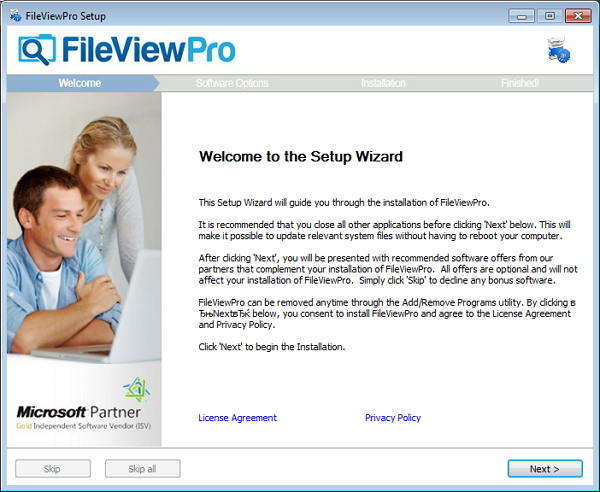
With so many formats, containers, codecs, and specialized uses, compatibility quickly becomes a real-world concern for users. One program may handle a mastering-quality file effortlessly while another struggles because it lacks the right decoder. When multiple tools and platforms are involved, it is easy for a project to accumulate many different file types. Years of downloads and backups often leave people with disorganized archives where some files play, others glitch, and some appear broken. By using FileViewPro, you can quickly preview unfamiliar audio files, inspect their properties, and avoid installing new apps for each extension you encounter. FileViewPro helps you examine the technical details of a file, confirm its format, and in many cases convert it to something better suited to your device or project.
For users who are not audio engineers but depend on sound every day, the goal is simplicity: you want your files to open, play, and behave predictably. Yet each click on a play button rests on decades of development in signal processing and digital media standards. Audio formats have grown from basic telephone-quality clips into sophisticated containers suitable for cinema, games, and immersive environments. Knowing the strengths and limits of different formats makes it easier to pick the right one for archiving, editing, or casual listening. FileViewPro helps turn complex audio ecosystems into something approachable, so you can concentrate on the listening experience instead of wrestling with formats.
- 이전글Top Ten Poker Sites Is Essential To What you are promoting. Study Why! 25.11.19
- 다음글Play m98 Gambling enterprise Online in Thailand 25.11.19
댓글목록
등록된 댓글이 없습니다.