
What's Holding Back This The Traffic Authority Industry?
페이지 정보

본문
Traffic Laws and the Traffic Authority in Boras
The traffic authority in Boras provides a number of benefits to organizations that desire to establish themselves in the city. These consist of an excellent location, the presence of long established e-commerce business and research study centers.
The city is likewise a major train junction. The Coast-to-Coast line from Gothenburg to Kalmar goes through the city center, as do the Alvsborg and Viskadal lines. All guest trains stop at Boras railway station.
Traffic law
A traffic law is a set of guidelines that govern the behavior of pedestrians, ridden animals, lorries, street vehicles, and other conveyances while on public roads. Traffic laws are suggested to ensure safety and fairness on the road. They likewise safeguard the rights and residential or commercial property of people. Traffic laws are comprised of numerous sections, each dealing with particular problems.
A minimum of 22 single motorbikes fitted with bora-bora (modified mufflers) were confiscated during a synchronised operation of the Traffic Management Center and Traffic Group in Davao City on Wednesday. This was in compliance with Mayor Rodrigo Duterte's order to take all mufflers that discharge loud noises, which break the nuisance law.
Get around Boras and beyond with a rental vehicle from Europcar. With a hassle-free location and a large selection of cars, it's easy to make the many of your trip.
Traffic indications
If you're going to drive in boras, you should be familiar with the traffic indications that are discovered on roadways and other public spaces. The purpose of these signs is to inform road users about road rules and regulations. The indications also serve as standards that drivers must follow to guarantee their safety. Traffic signs have various functions, from indicating the speed limitation to directing the instructions of the vehicle. They likewise offer information about the road conditions, such as avalanche warnings and school zones.
The traffic signs on a highway are arranged according to their meaning and area. For example, an end indication suggests that the rules of a specific road use up to the point where it is put up. In addition, a direction sign shows how to get to a specific place (town, health center, and so on). Additional panels on these signs offer extra info.
Some of these traffic indications are developed with symbols on a yellow background, while others include black signs and a rhombus-shaped background. The significances of these signs are typically explained in a language that's simple to understand. A few of these signs are controlled by national federal governments, while others are not. Sometimes, the global neighborhood has developed standards for tunnel signs.
Another essential traffic indication is the do not pass sign, which alerts road users that passing in an approaching lane is prohibited. This sign is normally posted on two-lane highways that are divided into a passing and an oncoming lane. It's typically challenging to see this check in bad climate condition or at night, that makes it especially harmful for drivers.
Other traffic indications consist of cross-out U-turn and left turn arrows. The former shows that you can not make a U-turn in a crossway area and is used to avoid congestion. The latter is used to avoid crashes in between lorries entering and exiting the same lane. Traffic lights are also necessary for directing drivers, but they can be difficult to check out in bad weather condition or in the evening. The light colors on these signals may not show up in the dark, and trafikverket skövde förnya Körkort their brightness can be impacted by snow or rain. Luckily, lots of traffic lights can be adjusted with a remote control or by the driver.
Traffic control
Traffic signal are a common sight at intersections and pedestrian crossings. They use a universal color code to indicate when it is safe to drive or walk. They may be installed on poles situated at street corners, hung from wires strung over the road, or set up within big horizontal gantries that extend external and over the right-of-way. A few of these gantries have an illuminated sign revealing the name of the cross-street, while others have a flashing light on the corner or near each intersection to alert motorists that there is a signal ahead.
In most countries, a red light indicates that all vehicles should stop; a green one means that traffic can proceed with caution. The colors of the lights are likewise typically a little different to make them much easier to identify. This helps people with red-green color blindness. Some traffic signals likewise include a flashing yellow, which suggests that drivers should continue with care if they can do so safely.
There are numerous kinds of traffic lights systems in use around the globe, but they all share specific fundamental characteristics. A lot of are managed by a computer system that calculates how long each stage should last. The control system can also differ depending upon the kind of road, time of day, and other factors.
Numerous towns have systems that enable emergency automobiles to interrupt the traffic signal. These are normally scheduled for ambulances and cops team vehicles, however can likewise consist of some public transportation automobiles such as buses and trains. However, there have been concerns that unapproved people might be able to get devices to activate the preemption of traffic control.
The majority of traffic control are set up in trines discs that reveal all directions at the same time, with a different green left or right "filter" arrow that lights up either separately of the main green (allowing turns at an otherwise traffic signal) or in addition to it to show that clashing traffic has actually been stopped and turning traffic does not require to yield (referred to as a secured turn in England).
There is a wide array of traffic signal from location to place, and they vary in how they are positioned and used. They might be mounted on upright poles at street corners or hung from wires that run over the road. They might be arranged in a circle, a square, or on a horizontal gantry that covers the whole intersection. Some have special features for pedestrians or level railway crossings, and some are integrated to work in tandem with other traffic controls.
Road safety
A major goal in road safety is to avoid accidents resulting in deaths and serious injuries. This requires a holistic technique, in which all parts of the system need to be adapted to match the abilities and needs of the road users. This consists of the design of roadways, automobiles and drivers. The traffic authority in Boras uses a number of various techniques to attain this, consisting of speed decreasing devices, trafikverket öRebro förnya körkort road markings and signs, and behavioural steps.
Pedestrians are a susceptible group on the roadways, so it is necessary to take unique care of them. In addition to preventing accidents, they must likewise be notified about their rights and obligations. This is specifically essential in crosswalks, where pedestrians have top priority. Car drivers ought to also understand their responsibilities to pave the way to pedestrians at zebra crossings. This is crucial because a modification in Swedish law in 2000 enhanced the obligation of automobile drivers to pave the way to pedestrians.
In order to avoid wildlife mishaps on the streets, körkortsfoto trafikverket fotografering öppettider (Going On this page) has actually developed a number of animal fences along roadways 27. These lie in between Svenljunga and Boras, as well as on the part of the road that runs through Vastra Gotaland county. In specific, this road has a high danger of wildlife mishaps due to its heavy traffic and relative lack of protective measures.
Other road safety steps in Boras include the installation of a brand-new road tunnel ventilation system. The system has actually been designed to meet EU safety requirements, and is anticipated to minimize tunnel fires in Boras by 2025. In addition, the tunnel's fire detection and alarm systems will help to improve emergency reaction times.
The city of Boras has a strong facilities, and lots of commercial companies lie in the region. For example, a large factory for Mini-Link microwave radios is located in Boras. The town's economy likewise gains from a close collaboration with the University of Boras and SP, Sweden's biggest technical research study institute.
 A significant proportion of the city's labor force is employed in the transportation industry. The city is home to a wide variety of business, from large shipping and logistics companies to little services. In addition, the city has a strong network of healthcare and education institutions. Its local structure consists of 16 administrative departments, which are responsible for carrying out the activities decided upon by the governing bodies.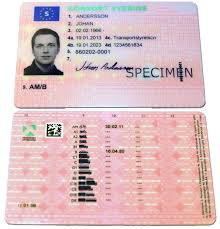
The traffic authority in Boras provides a number of benefits to organizations that desire to establish themselves in the city. These consist of an excellent location, the presence of long established e-commerce business and research study centers.
The city is likewise a major train junction. The Coast-to-Coast line from Gothenburg to Kalmar goes through the city center, as do the Alvsborg and Viskadal lines. All guest trains stop at Boras railway station.
Traffic law
A traffic law is a set of guidelines that govern the behavior of pedestrians, ridden animals, lorries, street vehicles, and other conveyances while on public roads. Traffic laws are suggested to ensure safety and fairness on the road. They likewise safeguard the rights and residential or commercial property of people. Traffic laws are comprised of numerous sections, each dealing with particular problems.
A minimum of 22 single motorbikes fitted with bora-bora (modified mufflers) were confiscated during a synchronised operation of the Traffic Management Center and Traffic Group in Davao City on Wednesday. This was in compliance with Mayor Rodrigo Duterte's order to take all mufflers that discharge loud noises, which break the nuisance law.
Get around Boras and beyond with a rental vehicle from Europcar. With a hassle-free location and a large selection of cars, it's easy to make the many of your trip.
Traffic indications
If you're going to drive in boras, you should be familiar with the traffic indications that are discovered on roadways and other public spaces. The purpose of these signs is to inform road users about road rules and regulations. The indications also serve as standards that drivers must follow to guarantee their safety. Traffic signs have various functions, from indicating the speed limitation to directing the instructions of the vehicle. They likewise offer information about the road conditions, such as avalanche warnings and school zones.
The traffic signs on a highway are arranged according to their meaning and area. For example, an end indication suggests that the rules of a specific road use up to the point where it is put up. In addition, a direction sign shows how to get to a specific place (town, health center, and so on). Additional panels on these signs offer extra info.
Some of these traffic indications are developed with symbols on a yellow background, while others include black signs and a rhombus-shaped background. The significances of these signs are typically explained in a language that's simple to understand. A few of these signs are controlled by national federal governments, while others are not. Sometimes, the global neighborhood has developed standards for tunnel signs.
Another essential traffic indication is the do not pass sign, which alerts road users that passing in an approaching lane is prohibited. This sign is normally posted on two-lane highways that are divided into a passing and an oncoming lane. It's typically challenging to see this check in bad climate condition or at night, that makes it especially harmful for drivers.
Other traffic indications consist of cross-out U-turn and left turn arrows. The former shows that you can not make a U-turn in a crossway area and is used to avoid congestion. The latter is used to avoid crashes in between lorries entering and exiting the same lane. Traffic lights are also necessary for directing drivers, but they can be difficult to check out in bad weather condition or in the evening. The light colors on these signals may not show up in the dark, and trafikverket skövde förnya Körkort their brightness can be impacted by snow or rain. Luckily, lots of traffic lights can be adjusted with a remote control or by the driver.
Traffic control
Traffic signal are a common sight at intersections and pedestrian crossings. They use a universal color code to indicate when it is safe to drive or walk. They may be installed on poles situated at street corners, hung from wires strung over the road, or set up within big horizontal gantries that extend external and over the right-of-way. A few of these gantries have an illuminated sign revealing the name of the cross-street, while others have a flashing light on the corner or near each intersection to alert motorists that there is a signal ahead.
In most countries, a red light indicates that all vehicles should stop; a green one means that traffic can proceed with caution. The colors of the lights are likewise typically a little different to make them much easier to identify. This helps people with red-green color blindness. Some traffic signals likewise include a flashing yellow, which suggests that drivers should continue with care if they can do so safely.
There are numerous kinds of traffic lights systems in use around the globe, but they all share specific fundamental characteristics. A lot of are managed by a computer system that calculates how long each stage should last. The control system can also differ depending upon the kind of road, time of day, and other factors.
Numerous towns have systems that enable emergency automobiles to interrupt the traffic signal. These are normally scheduled for ambulances and cops team vehicles, however can likewise consist of some public transportation automobiles such as buses and trains. However, there have been concerns that unapproved people might be able to get devices to activate the preemption of traffic control.
The majority of traffic control are set up in trines discs that reveal all directions at the same time, with a different green left or right "filter" arrow that lights up either separately of the main green (allowing turns at an otherwise traffic signal) or in addition to it to show that clashing traffic has actually been stopped and turning traffic does not require to yield (referred to as a secured turn in England).
There is a wide array of traffic signal from location to place, and they vary in how they are positioned and used. They might be mounted on upright poles at street corners or hung from wires that run over the road. They might be arranged in a circle, a square, or on a horizontal gantry that covers the whole intersection. Some have special features for pedestrians or level railway crossings, and some are integrated to work in tandem with other traffic controls.
Road safety
A major goal in road safety is to avoid accidents resulting in deaths and serious injuries. This requires a holistic technique, in which all parts of the system need to be adapted to match the abilities and needs of the road users. This consists of the design of roadways, automobiles and drivers. The traffic authority in Boras uses a number of various techniques to attain this, consisting of speed decreasing devices, trafikverket öRebro förnya körkort road markings and signs, and behavioural steps.
Pedestrians are a susceptible group on the roadways, so it is necessary to take unique care of them. In addition to preventing accidents, they must likewise be notified about their rights and obligations. This is specifically essential in crosswalks, where pedestrians have top priority. Car drivers ought to also understand their responsibilities to pave the way to pedestrians at zebra crossings. This is crucial because a modification in Swedish law in 2000 enhanced the obligation of automobile drivers to pave the way to pedestrians.
In order to avoid wildlife mishaps on the streets, körkortsfoto trafikverket fotografering öppettider (Going On this page) has actually developed a number of animal fences along roadways 27. These lie in between Svenljunga and Boras, as well as on the part of the road that runs through Vastra Gotaland county. In specific, this road has a high danger of wildlife mishaps due to its heavy traffic and relative lack of protective measures.
Other road safety steps in Boras include the installation of a brand-new road tunnel ventilation system. The system has actually been designed to meet EU safety requirements, and is anticipated to minimize tunnel fires in Boras by 2025. In addition, the tunnel's fire detection and alarm systems will help to improve emergency reaction times.
The city of Boras has a strong facilities, and lots of commercial companies lie in the region. For example, a large factory for Mini-Link microwave radios is located in Boras. The town's economy likewise gains from a close collaboration with the University of Boras and SP, Sweden's biggest technical research study institute.
A significant proportion of the city's labor force is employed in the transportation industry. The city is home to a wide variety of business, from large shipping and logistics companies to little services. In addition, the city has a strong network of healthcare and education institutions. Its local structure consists of 16 administrative departments, which are responsible for carrying out the activities decided upon by the governing bodies.- 이전글Three Cures For Male Pattern Baldness - Do Not Ignore This! 25.04.28
- 다음글기아, ‘관세 회피’ 수요 몰려 1분기 매출 역대 최대 25.04.28
댓글목록
등록된 댓글이 없습니다.