
How FileViewPro Makes AC7 File Opening Effortless
페이지 정보

본문
An AC7 file represents a digital rhythm/accompaniment file for Casio instruments containing style and rhythm information that the keyboard uses to generate automatic backing parts during performance. Casio’s own documentation and user communities describe AC7 as the target rhythm format for newer keyboards, where legacy CKF style collections are imported and exported as AC7 files, turning bundled rhythm banks into individual, ready-to-use rhythm data that drives the instrument’s backing engine. Because AC7 is highly specialized and tied to Casio’s rhythm engine, most generic audio players and editors on Windows or macOS do not recognize it as a playable audio file, so double-clicking an AC7 usually leads to errors or nothing happening at all unless you have the original Casio software and hardware. FileViewPro helps bridge that gap by recognizing AC7 as a valid, Casio-related audio rhythm format: you can open the file from one place, see technical and descriptive details about the rhythm data, and where compatible content is exposed, preview or convert the underlying audio portions into more familiar formats such as WAV or MP3 so that Casio rhythm sets can be understood, cataloged, and incorporated into your normal audio library without relying solely on the original keyboard tools.
Behind almost every sound coming from your devices, there is an audio file doing the heavy lifting. From music and podcasts to voice notes and system beeps, all of these experiences exist as audio files on some device. At the most basic level, an audio file is a digital container that holds a recording of sound. If you have any issues with regards to wherever and how to use AC7 file technical details, you can get hold of us at the web site. That sound starts life as an analog waveform, then is captured by a microphone and converted into numbers through a process called sampling. Your computer or device measures the sound wave many times per second, storing each measurement as digital values described by sample rate and bit depth. When all of those measurements are put together, they rebuild the sound you hear through your speakers or earphones. An audio file organizes and stores these numbers, along with extra details such as the encoding format and metadata.
The history of audio files is closely tied to the rise of digital media and communications. Early digital audio research focused on sending speech efficiently over limited telephone lines and broadcast channels. Standards bodies such as MPEG, together with early research labs, laid the groundwork for modern audio compression rules. The breakthrough MP3 codec, developed largely at Fraunhofer IIS, enabled small audio files and reshaped how people collected and shared music. MP3 could dramatically reduce file sizes by discarding audio details that human ears rarely notice, making it practical to store and share huge music libraries. Other formats came from different ecosystems and needs: Microsoft and IBM introduced WAV for uncompressed audio on Windows, Apple created AIFF for Macintosh, and AAC tied to MPEG-4 eventually became a favorite in streaming and mobile systems due to its efficiency.
As technology progressed, audio files grew more sophisticated than just basic sound captures. Two important ideas explain how most audio formats behave today: compression and structure. Lossless standards like FLAC and ALAC work by reducing redundancy, shrinking the file without throwing away any actual audio information. On the other hand, lossy codecs such as MP3, AAC, and Ogg Vorbis intentionally remove data that listeners are unlikely to notice to save storage and bandwidth. You can think of the codec as the language of the audio data and the container as the envelope that carries that data and any extra information. This is why an MP4 file can hold AAC sound, multiple tracks, and images, and yet some software struggles if it understands the container but not the specific codec used.
Once audio turned into a core part of daily software and online services, many advanced and specialized uses for audio files emerged. In professional music production, recording sessions are now complex projects instead of simple stereo tracks, and digital audio workstations such as Pro Tools, Logic Pro, and Ableton Live save projects that reference many underlying audio files. Surround and immersive audio formats let post-production teams position sound above, behind, and beside the listener for a more realistic experience. In gaming, audio files must be optimized for low latency so effects trigger instantly; many game engines rely on tailored or proprietary formats to balance audio quality with memory and performance demands. Newer areas such as virtual reality and augmented reality use spatial audio formats like Ambisonics, which capture a full sound field around the listener instead of just left and right channels.
In non-entertainment settings, audio files underpin technologies that many people use without realizing it. Voice assistants and speech recognition systems are trained on massive collections of recorded speech stored as audio files. When you join a video conference or internet phone call, specialized audio formats keep speech clear even when the connection is unstable. These recorded files may later be run through analytics tools to extract insights, compliance information, or accurate written records. Even everyday gadgets around the house routinely produce audio files that need to be played back and managed by apps and software.
A huge amount of practical value comes not just from the audio data but from the tags attached to it. Inside a typical music file, you may find all the information your player uses to organize playlists and display artwork. Standards such as ID3 tags for MP3 files or Vorbis comments for FLAC and Ogg formats define how this data is stored, making it easier for media players to present more than just a filename. When metadata is clean and complete, playlists, recommendations, and search features all become far more useful. Over years of use, libraries develop missing artwork, wrong titles, and broken tags, making a dedicated viewer and editor an essential part of audio management.
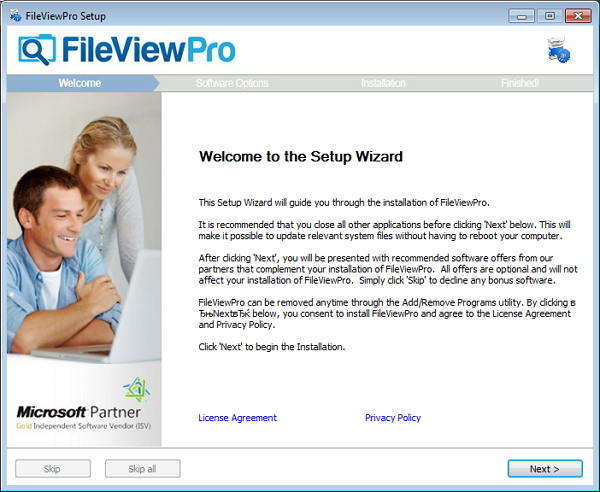
As your collection grows, you are likely to encounter files that some programs play perfectly while others refuse to open. Older media players may not understand newer codecs, and some mobile devices will not accept uncompressed studio files that are too large or unsupported. Collaborative projects may bundle together WAV, FLAC, AAC, and even proprietary formats, creating confusion for people who do not have the same software setup. At that point, figuring out what each file actually contains becomes as important as playing it. By using FileViewPro, you can quickly preview unfamiliar audio files, inspect their properties, and avoid installing new apps for each extension you encounter. FileViewPro helps you examine the technical details of a file, confirm its format, and in many cases convert it to something better suited to your device or project.
For users who are not audio engineers but depend on sound every day, the goal is simplicity: you want your files to open, play, and behave predictably. Behind that simple experience is a long history of research, standards, and innovation that shaped the audio files we use today. From early experiments in speech encoding to high-resolution multitrack studio projects, audio files have continually adapted as new devices and platforms have appeared. By understanding the basics of how audio files work, where they came from, and why so many different types exist, you can make smarter choices about how you store, convert, and share your sound. Combined with a versatile tool like FileViewPro, that understanding lets you take control of your audio collection, focus on what you want to hear, and let the software handle the technical details in the background.
- 이전글Math Tuition for Junior College 1 Students in Singapore: A Parent's Essential Guide 25.12.29
- 다음글Motivating Your JC2 Student to Excel in Math: A Guide for Singapore Parents 25.12.29
댓글목록
등록된 댓글이 없습니다.